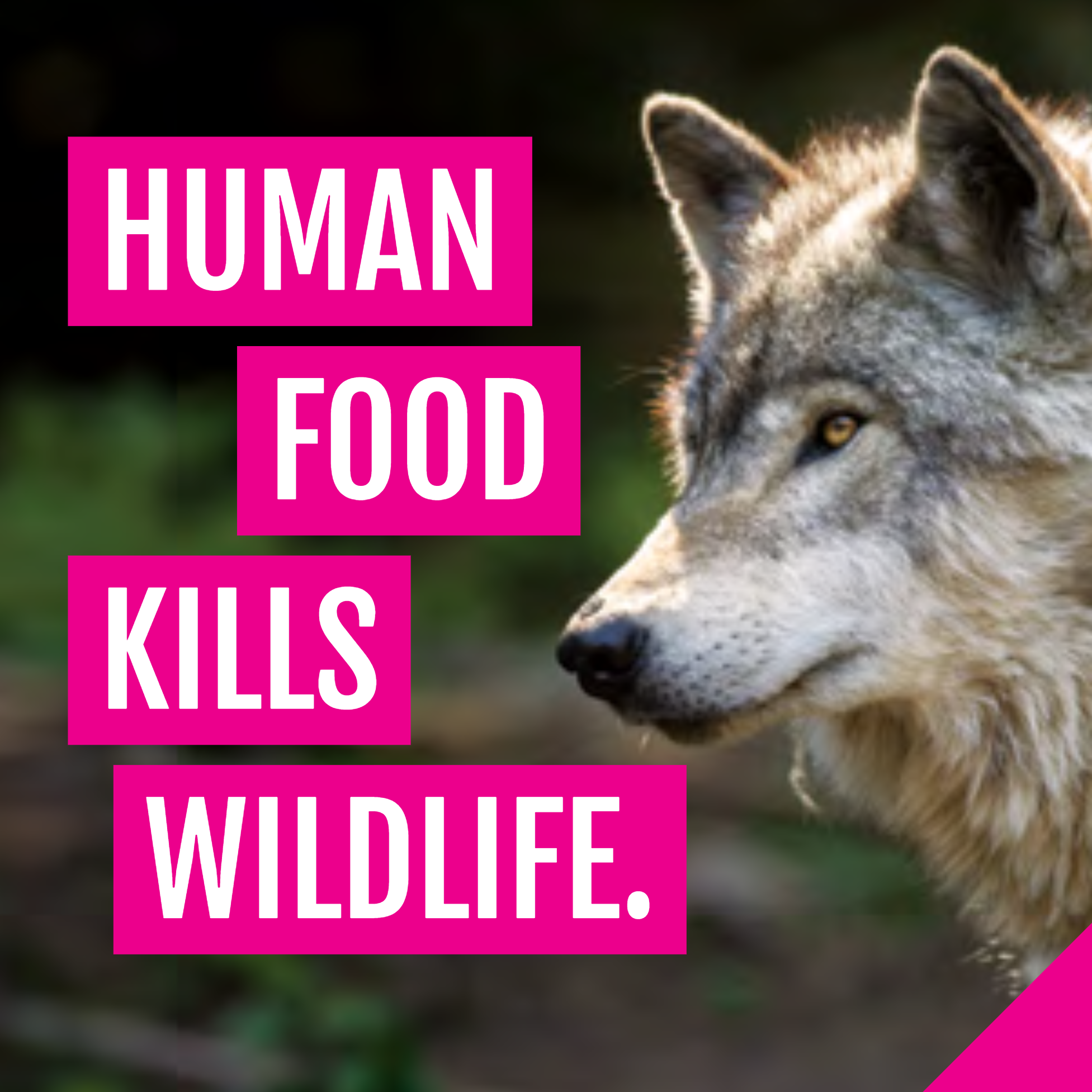
Human food kills wildlife.
Always put garbage in a wildlife-proof bin.
Wildlife like bears, coyotes, and wolves can smell food and garbage from far away. If they find it once, they’ll come back again. They can forget how to find their natural food sources and begin to rely on eating human food and garbage. Over time, this can cause them to lose their natural instincts. This shift not only disrupts wildlife’s role in nature but also puts them at serious risk. Human garbage often contains substances that are toxic or indigestible to wildlife, leading to illness or injury. Worse, animals that become habituated to human food sources often lose their fear of people, increasing the chances of dangerous encounters. In many cases, these animals must be relocated—or killed.
-
Always use bear-proof bins for garbage, recycling, and food waste.
Never leave garbage outside—not on the ground, in a fire pit, or in the bed of your truck.
Pack up everything when camping or picnicking. Don’t leave food or trash behind.
At home, keep garbage and compost locked up and out of reach of wildlife.
Report garbage left outside in parks or public areas to local authorities.
Remember: Even small things like apple cores or snack wrappers can attract wildlife
If you brought it in, take it out.Ensure all garbage, recycling, and food waste (even organic waste, like banana peels and apple cores) are disposed of in a wildlife-proof garbage bin.
-
-
Feeding wildlife in the Bow Valley, even accidentally, can lead to fines between $250 and $25,000.
In addition to garbage, wildlife attractants include fruit trees, bird feeders, pet food left outside, compost piles, and barbecue grills. Learn more about fruit trees here.
-
Parks Canada: Dispose of Garbage
Park Canada: Camping Safety
Town of Banff: Fruit Tree Replacement Program
Town of Canmore: Fruit tree Removal Incentive