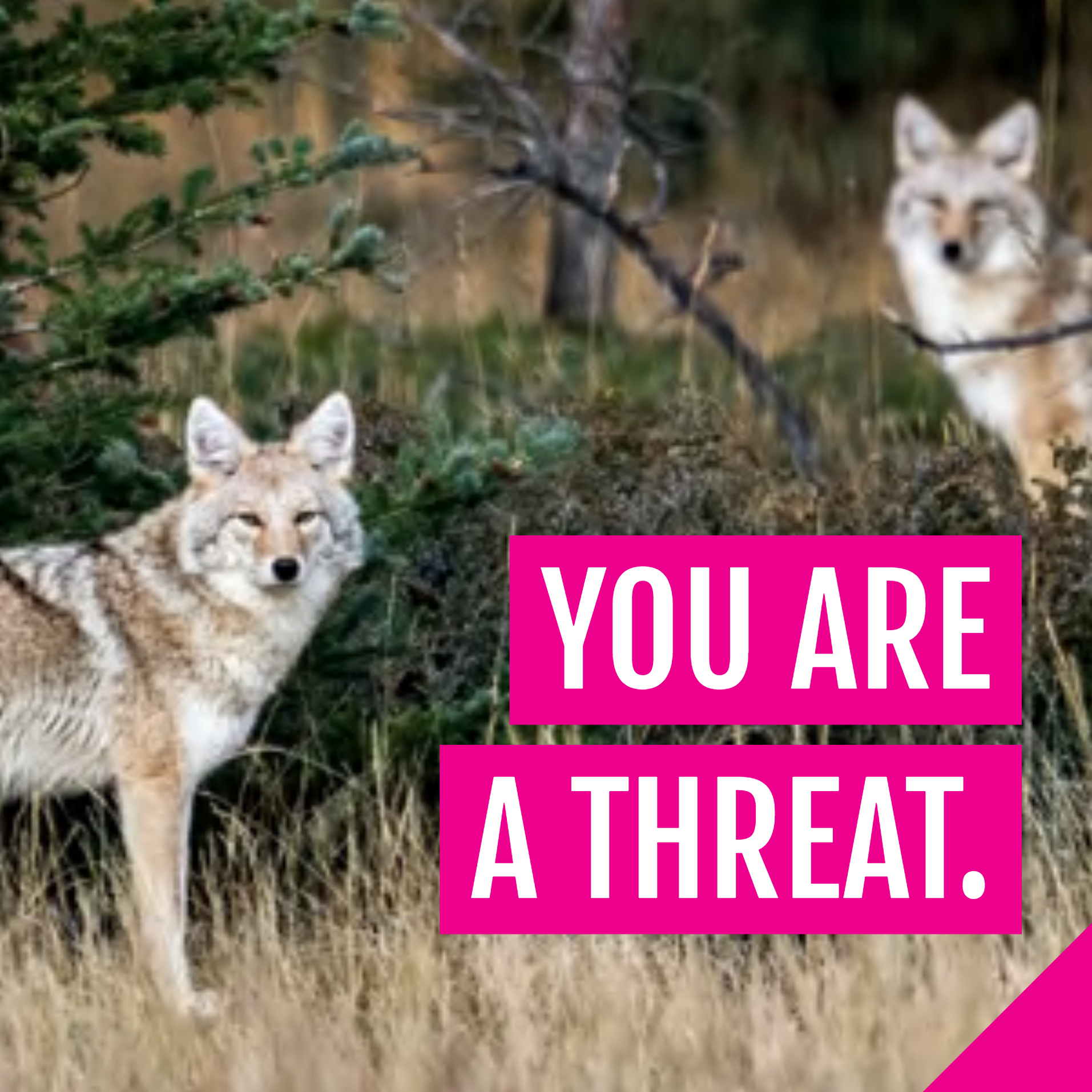
You are a threat.
Give wildlife the space they need.
Wildlife like bears, elk, and wolves need room to eat, rest, and raise their young. When people get too close, animals can feel scared or trapped, and that’s when things can go wrong. They might charge, bite, or attack to protect themselves or their young. Even if they don’t hurt anyone, they may be relocated or killed just for becoming too comfortable around people. Giving animals space helps keep them wild, healthy, and safe–it keeps you safe too.
-
Stay at least 100 metres away from bears, wolves, cougars, and coyotes (that’s about 10 bus lengths).
Stay at least 30 metres away from elk, deer, sheep, and moose (about 3 bus lengths).
Never approach wildlife, even for a photo.
Use binoculars or a zoom lens if you want a closer look.
Keep your dog on leash. Off-leash pets can provoke wildlife and may view them as a threat.
Stay on designated trails and respect trail closures–they’re there to protect you and wildlife.
Remember:
If an animal changes its behaviour because of you, it means you’re too close. Back away slowly and give it space. -
Always Carry Bear Spray in an easily accessible place and know how to use it. Learn more about bear spray here (link to bear spray page)
Watch for fresh bear signs
Whether you are exploring by foot, bike, or vehicle, always keep at least 100 metres (or 10 bus lengths) between you and the bear
Make Noise and travel in groups
-
Elks can be more dangerous during calving season and during the rut
Always keep at least 30 metres (or three bus lengths) between you and the elk
Calving season
Takes place in the Spring (May-July)
Certain areas may be closed during this time to avoid elk and human conflicts
If an elk becomes alert or nervous, grinds its teeth or sends its ears back, you're too close - back off
If you come across a calf, the mother is typically close by. Do not approach the calf
Rut/ Mating Season
Takes place in the Fall (August-October)
This is the breeding season, making Bull (male) elk extremely aggressive to protect the female elk
Watch for elk at all times and detour around them
-
Living in the Bow Valley means sharing space with wildlife every day. Your habits shape animal behaviour. What you do at home, on trails, and in town matters.
Your role:
Secure attractants: Keep garbage, pet food, bird feeders, and compost locked up. Wildlife that finds food near homes may return and become a danger.
Report sightings: If you see wildlife in urban areas, report it to local authorities. Early intervention can prevent relocation or euthanasia.
Be a community steward: Talk to neighbours and visitors about giving wildlife space. Your voice helps protect animals and people.
Keep pets under control: Off-leash dogs can chase or provoke wildlife, leading to dangerous encounters. Learn more about leashes.
Why it matters:
Animals that become comfortable in town are often relocated or killed. By keeping wildlife wild, you help ensure they stay healthy and free – and you keep your community safe. -
Your role:
Keep your distance: Use zoom lenses and binoculars. Never approach wildlife, even if they seem calm.
Stay on designated trails: Closed areas are often near sensitive habitats or recent wildlife activity.
Learn before you go: Check for seasonal wildlife alerts and trail closures. Know what to do if you encounter an animal.
Leave no trace: Pack out all garbage and food scraps. Even small bits can attract animals.
Why it matters:
Wildlife that gets used to people may lose their fear, and that’s dangerous for everyone. Respecting space helps animals stay wild and keeps your visit in the Bow Valley safe. -
Banff dispatch: 403-762-1470
Canmore: 403-591-7755
-
Parks Canada: Bear Safety
Parks Canada: Elk Safety